Sigmund Strochlitz
Biography
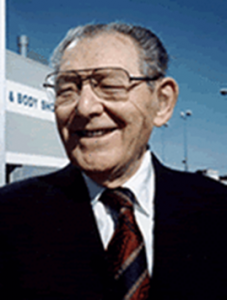 Sigmund Strochlitz (1916-2006)
Born in Będzin, Poland, in 1916, Sigmund Strochlitz was 23 years old when the Germans invaded Poland in 1939. A student at the Jagiellonian University in Krakow, Sigmund first fled east to the Soviet Union, but concerns for his family led him to return to his hometown in the course of the war.
In August 1943 the Będzin ghetto was liquidated, and the family was deported to Birkenau. His parents, sister and wife were killed on arrival. Sigmund survived 15 months in the harsh conditions in the camp as well as the perilous death march. He was liberated by the British forces in Bergen-Belsen in 1945.
After the war, he stayed in Bergen-Belsen, which the British had made into a camp for displaced persons. In the camp, he married Rosa Grinberg and the couple emigrated to New York in 1951. They had four children – Jaime, Rafael, Halina and Romana – and more than 30 grandchildren and great grandchildren. Sigmund found success as a Ford dealer, but he remained utmost committed never to forget his experience in Nazi camps. In a 2003 interview, he said he regretted removing the number on his arm.
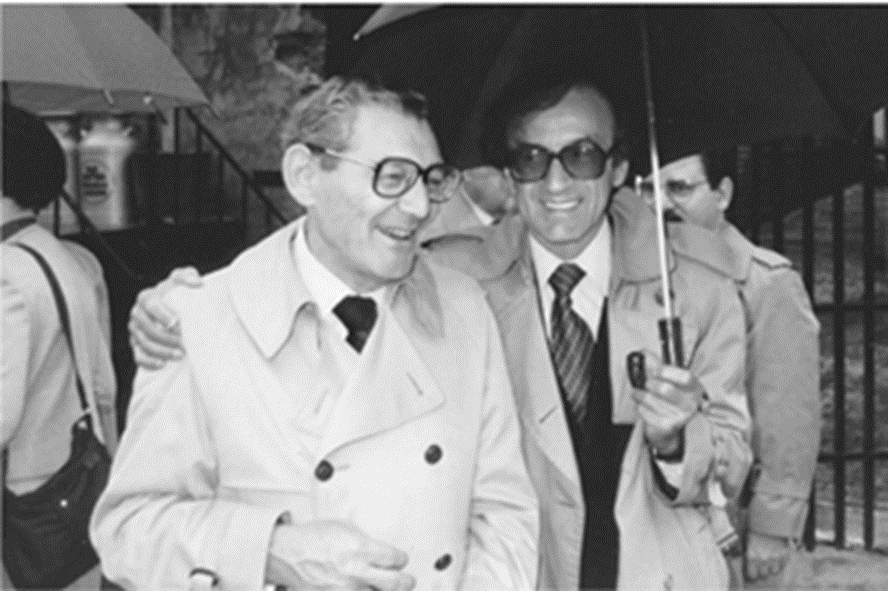
A leader in Holocaust causes, he worked closely with his friend Elie Wiesel on the creation of the National Holocaust Memorial Museum. In 1978 he accepted President Carter’s appointment (together with Elie Wiesel) to the President’s Commission on the Holocaust. The two survivors were dispatched to Europe and Israel to study Holocaust memorials, and Mr. Strochlitz’s served as Chairman of the Remembrance Committee.
Sigmund Strochlitz also served as the President of the Friends of Haifa University and as Governor of Bar-Ilan University. In 1977, he received an honorary doctorate from Bar Ilan University and in 1982 became an honorary fellow at the University of Haifa. He also served as a trustee of the American Jewish Congress and was a member of the American Society for Yad Vashem.
The Strochlitz Institute of Holocaust Studies at the University of Haifa is named in memory of Shlomo Zalman and Shoshana Strochlitz. It was established in cooperation with the Ghetto Fighters House.